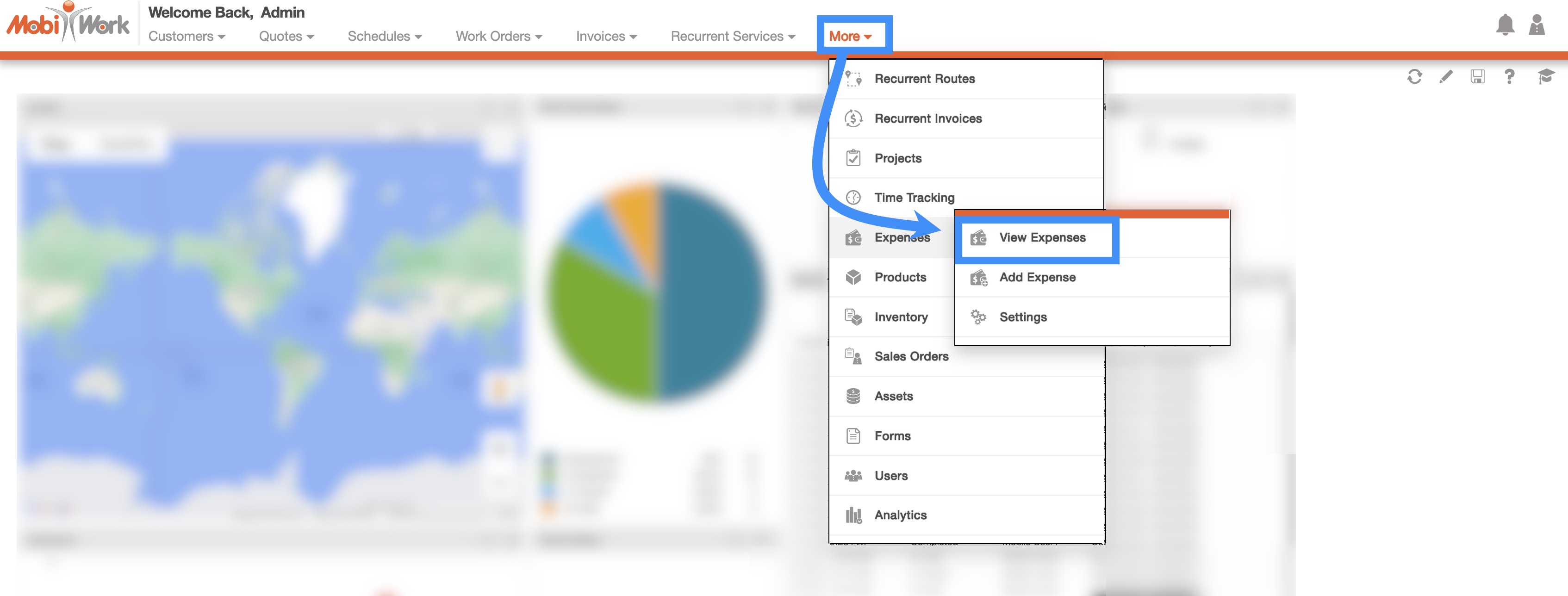
You can access the Expenses feature page by hovering over the Expenses feature from your MobiWork menu and clicking on the "View Expenses" option:
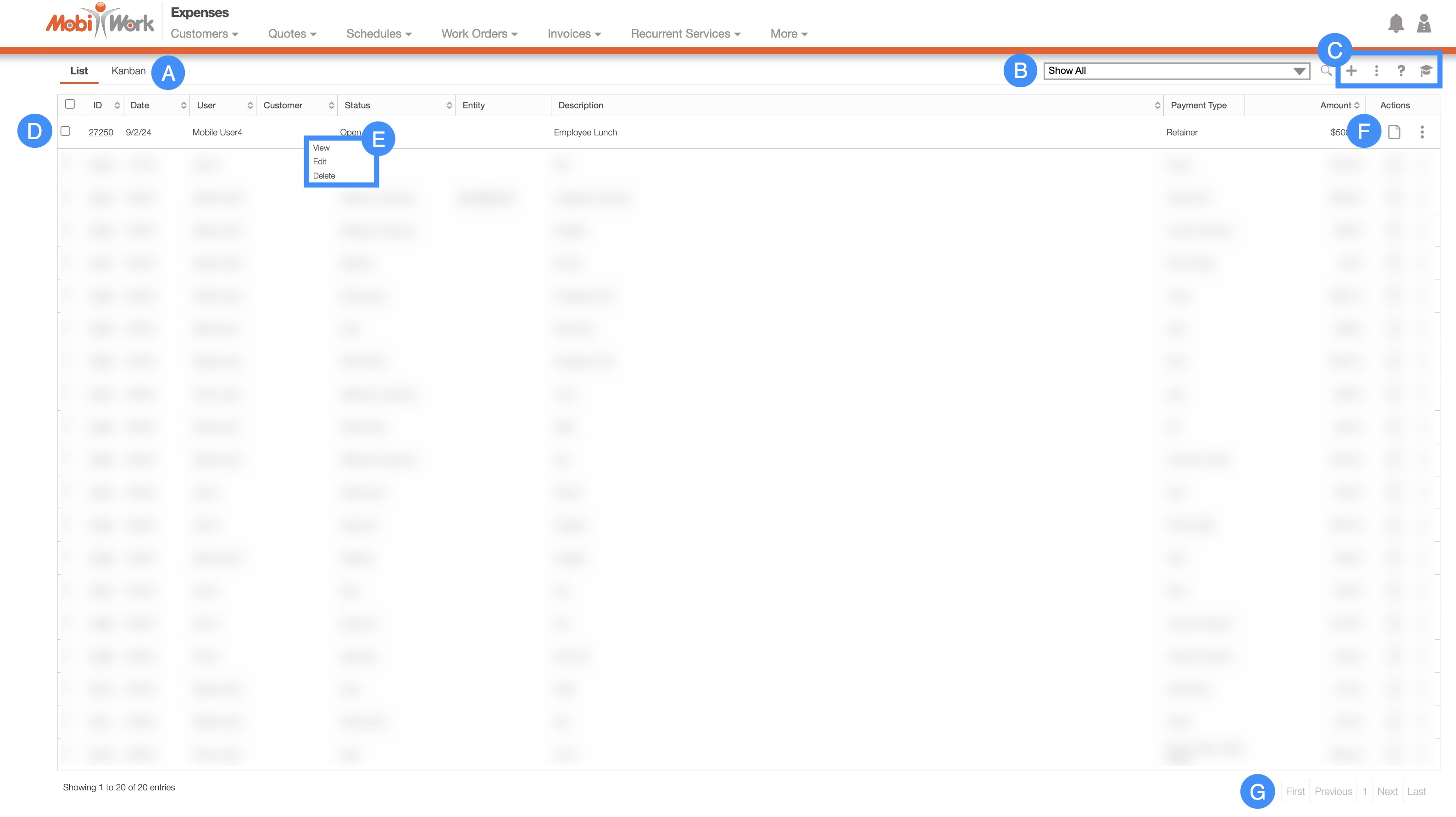
The Expenses "List" tab is the default tab you will be brought to once you access the Expenses feature page; from this page you can see all your expenses' data summarized on one page.
Below is a list of the main features that are located on the "List" tab:
Free-Text Search
You can type in the search bar (free-text search) to locate a specific expense. Once you click in the search bar, the search drop-down menu will automatically appear. You can use the search drop-down menu or continue typing your own search parameters:

When typing in the search bar, the drop-down menu will provide some helpful search criteria. With free-text search you will also be able to search by:
The Expense ID.
If the number of expenses surpasses the number range, the subsequent number of expenses will be found on the next page:
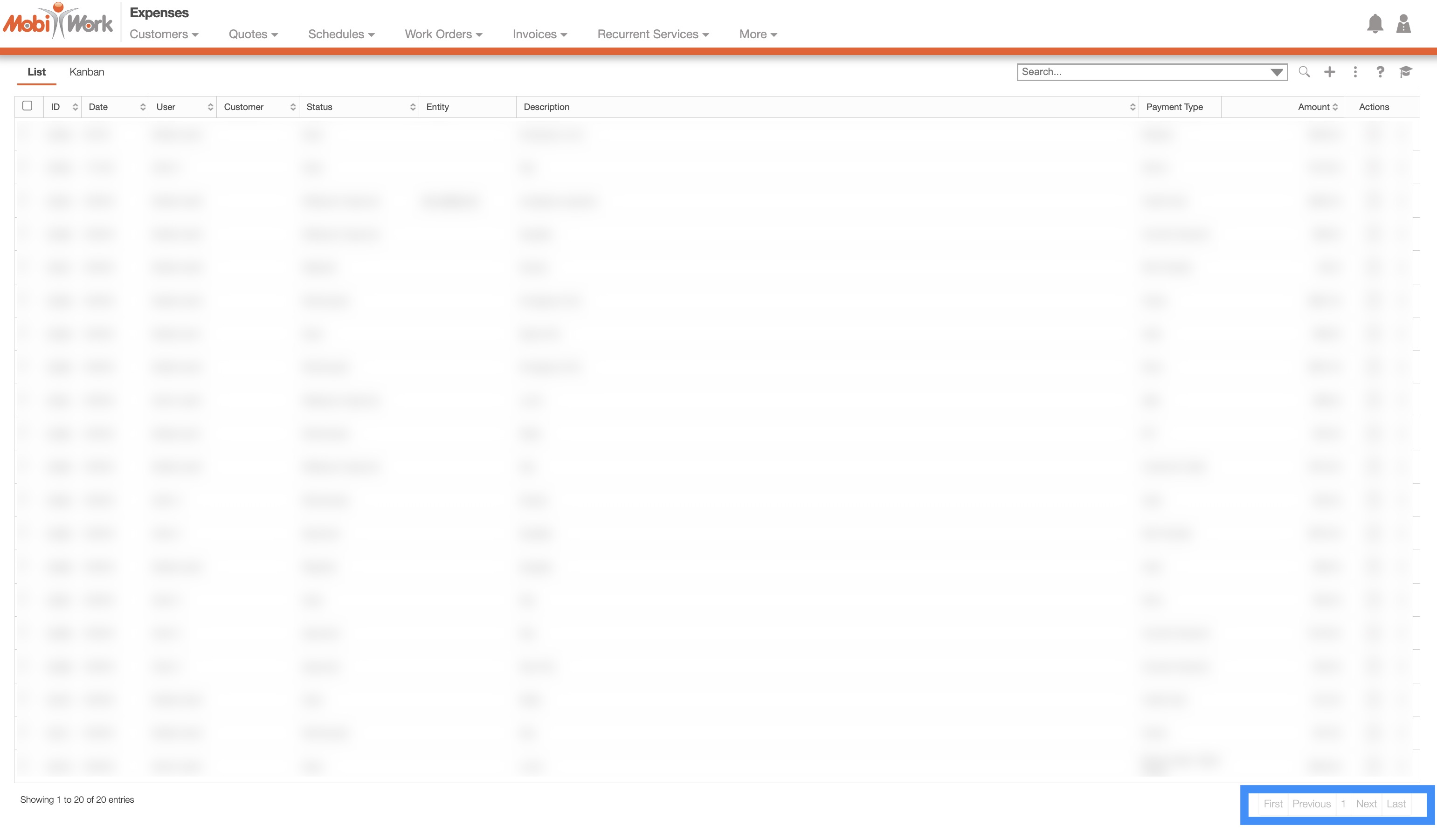
To navigate through these pages, use the First, Previous, Next, and Last buttons located towards the bottom of the Expenses section.
Predefined Saved Searches
Saved searches are a powerful search tool where the search-criteria has been saved for future use; to access the saved searches drop-down, click in the search bar. The default saved search for Expenses is the "Show All" search.
These saved searches will appear in the drop-down menu and can also be used for dashboards and reports.
By default, MobiWork provides saved searches for you to use:
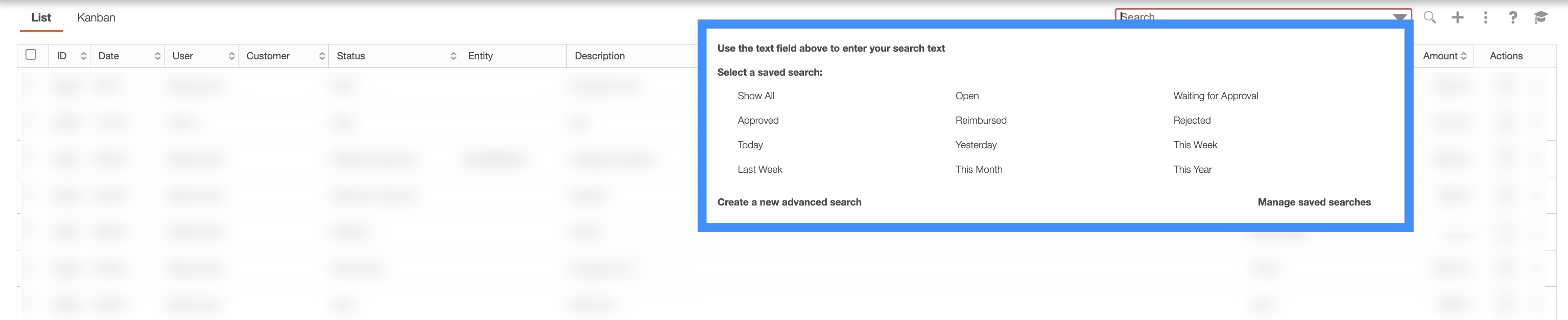
The predefined search for your expenses can be found below:
"Show All" will display all expenses.
"Approved" will display all expenses that have been approved.
"Today" will display all expenses with the expense date set for the present day.
"Last Week" will display all expenses with the expense date set for last week.
"Open" will display all open expenses.
"Reimbursed" will display all expenses that have been reimbursed.
"Yesterday" will display all expenses with the expense date set for yesterday.
"This Month" will display all expenses with the expense date set for the month.
"Waiting for Approval" will display all expenses that are waiting for approval.
"Rejected" will display all rejected expenses.
"This Week" will display all expenses with the expense date set for the week.
"This Year" will display all expenses with the expense date set for the year.
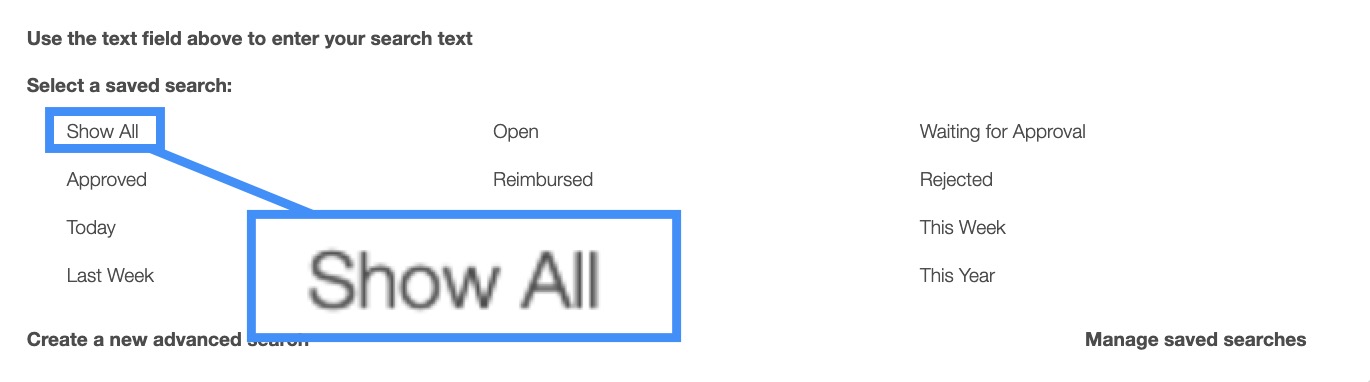
If you would like to view all your expenses, click on the "Show All" option from the drop-down menu:
New Search
To create a new saved search, select the "Create a New Advanced Search" option from the search menu:
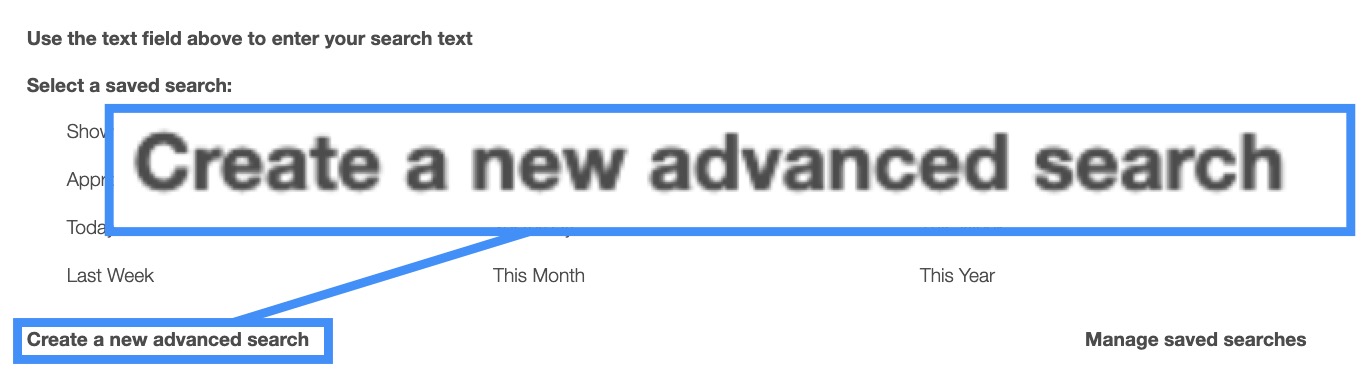
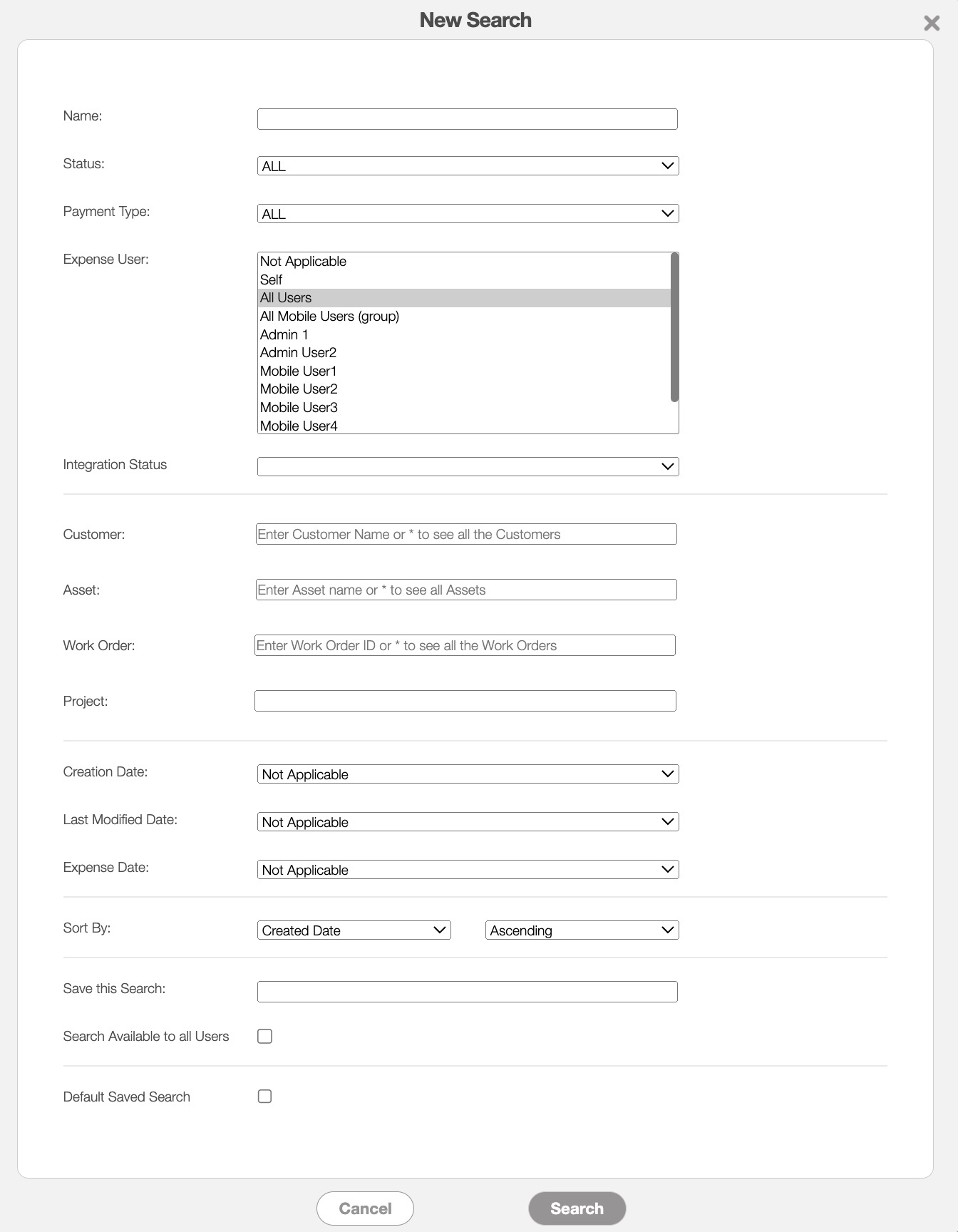
After clicking on "Create a New Advanced Search" a pop-up window will appear where you can enter your data in the appropriate fields. If you would like to exit from this pop-up window you can click on the esc button from your keyboard.
Please note that once you name a new saved search, you will be unable to rename it (instead you would need to delete your saved search and create a new one).
Once you have finished inputting the required information, you can save the search, make it available to all users, or make it your default search:
Please note that the data used to create a saved search can also serve as the basis for generating reports in MobiWork.
Further definitions for all the terms in the New Search pop-up window can be found below:
| Name: | Description: |
|---|---|
| "Name" | The name of the expense. |
| "Status" | The status of the expense. The status can be "Show All," "Approved," "Today," "Last Week," "Open," "Reimbursed," "Yesterday," "This Month," "Waiting For Approval," "Rejected," "This Week," or "This Year." |
| "Payment Type" | The method the user initially used to cover the payment. |
| "Expense User" | The user the expense is intended for. |
| "Integration Status" | The status of integrating with a third-party software solution such as QuickBooks. Includes the options: Not Applicable, Not Ready for Integration, Integrated, Ready for Integration, and Not Integrated. |
| "Customer" | The customer profile associated with the expense. |
| "Asset" | The asset associated with the expense. |
| "Work Order" | The work order associated with the expense. |
| "Project" | The project associated with the expense. |
| "Creation Date" | The creation date of the expense. |
| "Last Modified Date" | The last date that the expense was updated. |
| "Expense Date" | The due date of the expense. |
| "Sort By" | Sorts your search in ascending or descending order by: ID, Created Date, Expense Date, or Status. |
| "Save This Search" | Allows the search parameters to be saved under a name to be reused in the future. |
| "Search Available To All Users" | Allows the search to be available to all users. |
| "Default Saved Search" | Makes the specified search the default saved search. |
Manage Saved Searches
After creating a saved search, you can adjust the search criteria (e.g., dates, users, statuses, etc.) to include more data or to be more selective in the data that is being searched.
Please note that the data used to create a saved search can also serve as the basis for generating reports in MobiWork.
Any new searches or existing searches can be managed or edited in the Manage Saved Searches pop-up window:
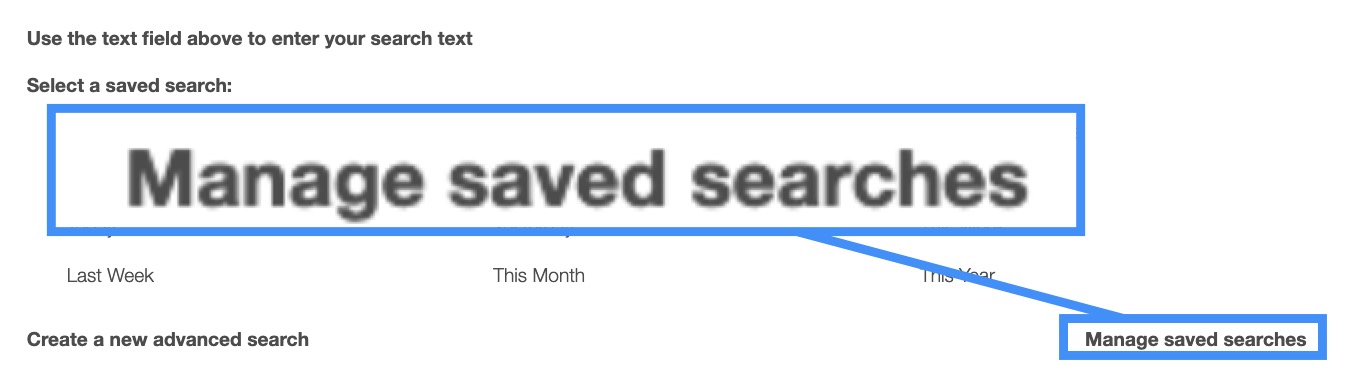
To manage, edit, or remove any Saved Searches you can access the "Manage Saved Searches" option in the drop-down menu; the Manage Saved Searches pop-up window will then appear:
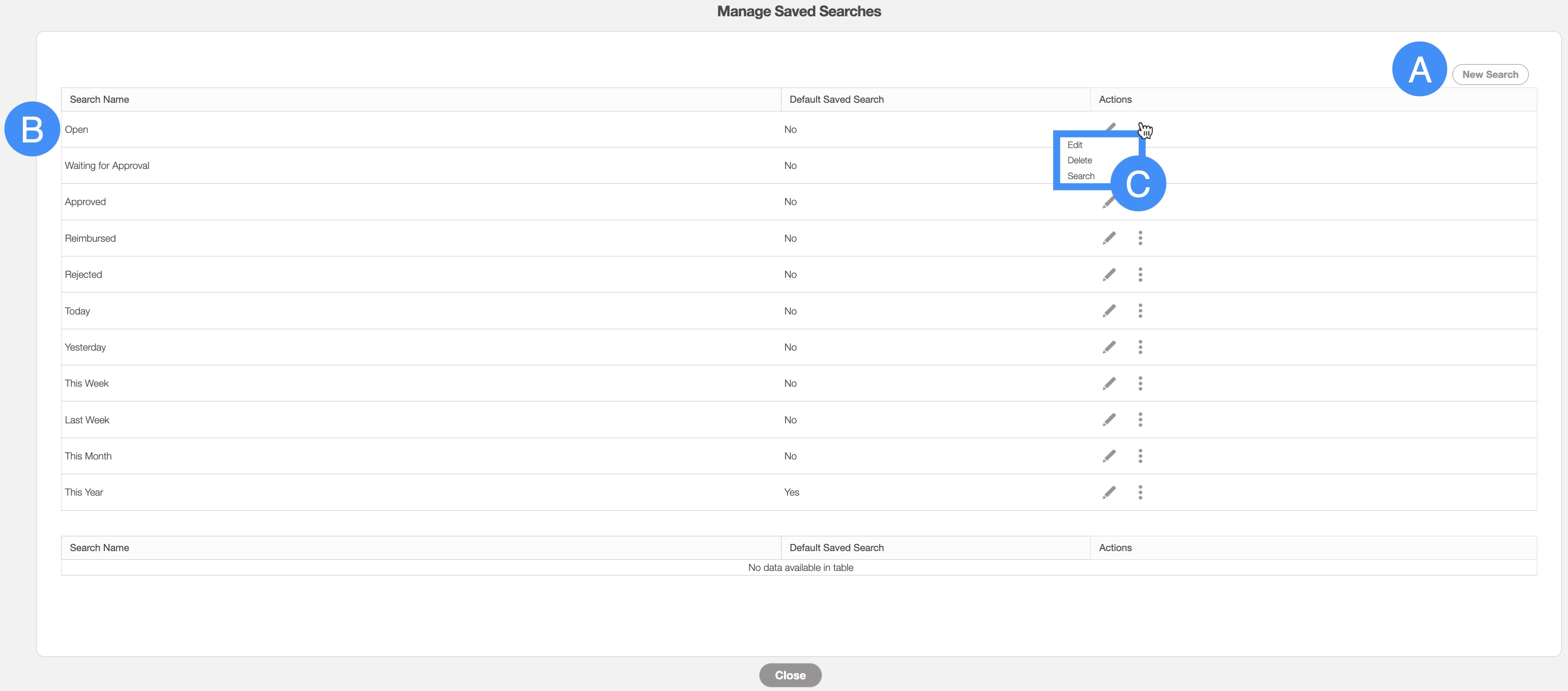
You can add a new saved search by clicking the New Search button in the top right of the pop-up window.
You can rearrange the order of the saved searches by clicking, then dragging & dropping the selected Search.
You can edit or delete a selected saved search by using the drop-down menu under the "Actions" column.
If you would like to easily close this pop-up window, you can click on the esc button from your keyboard.
The "Global Actions" section is located at the top-right of your "List" tab:
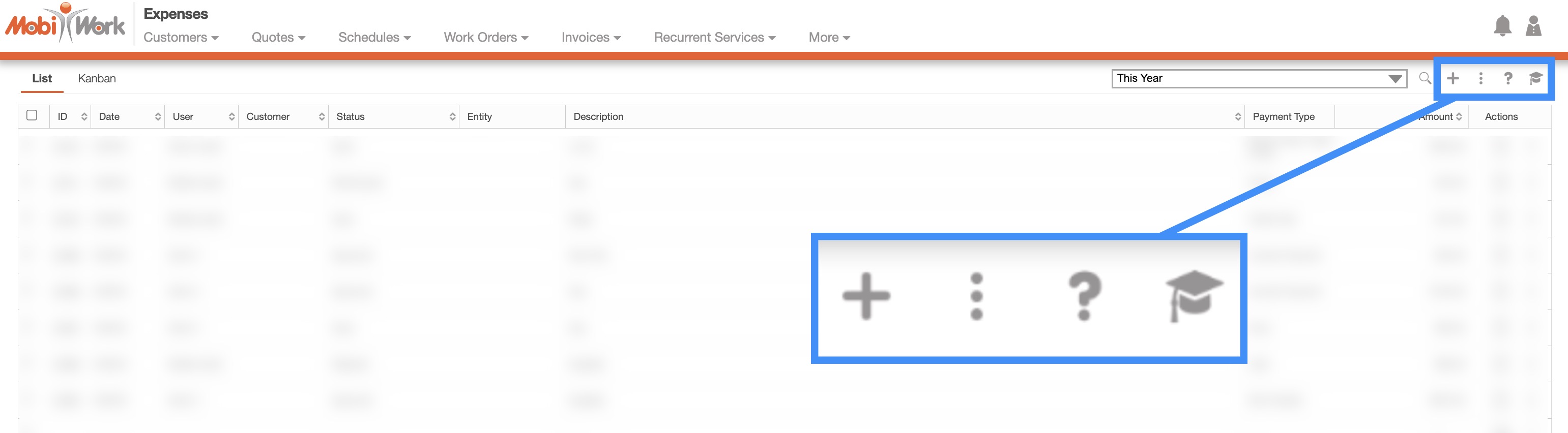
The "Global Actions" section includes:
The Plus Sign button which will allow you to quickly add a new expense.
The More Actions button (represented by the three vertical dots) which will allow you to edit the integration status, view, and import/export data from excel.
The Question Mark button which will direct you to the respective MobiWork Features page
The Graduation Cap which will activate the Onboarding Assistant.
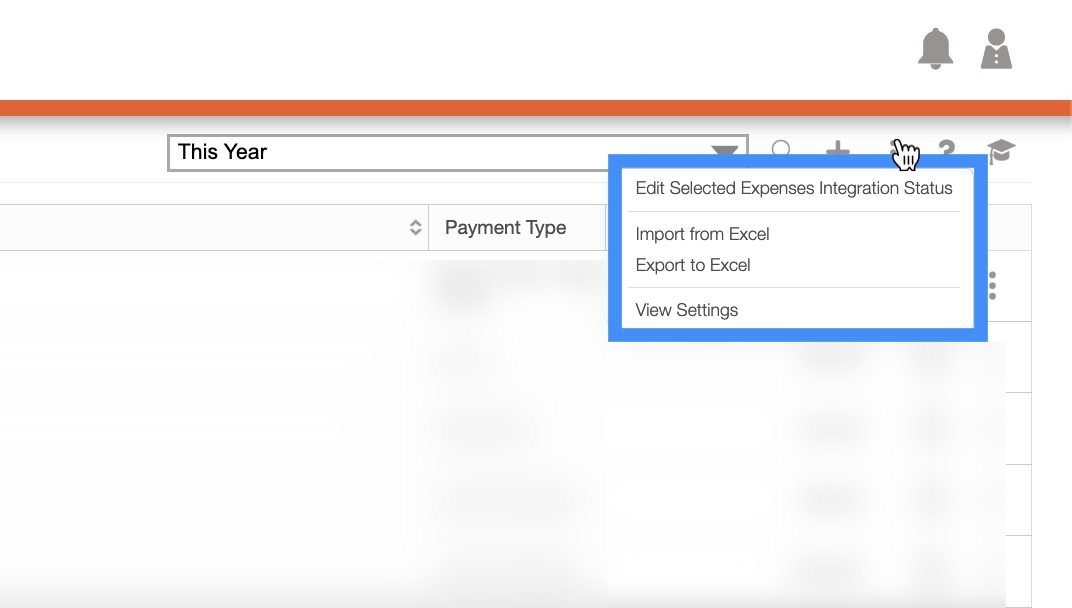
After clicking on the vertical three dots in the top-right corner, the More Actions drop-down menu will appear.
From the More Actions drop-down menu, you can select various actions that will help to manage your company's expenses.
These actions can be performed on a single expense or on multiple expenses.
The complete list of actions found in the More Actions drop-down menu are defined below:
| Name: | Description: |
|---|---|
| "Edit Selected Expenses Integration Status" | Allows you to edit the integration status of the selected expenses. |
| "Import From Excel" | Imports the selected expenses from Excel. |
| "Export To Excel" | Exports the selected expenses to Excel. |
| "View Settings" | Directs you to the Expense Settings page where you can further customize the information and settings found on your expenses. |
The "List" tab will display the data associated with the expense and will allow you to perform actions on the selected expense.
List Tab Columns
In the "List" tab, the columns are structured to display specific data related to each individual expense.
These columns are organized as: "ID," "Name," "Date," "User," "Customer," "Status," Entity," "Description," "Payment Type," "Amount," and "Actions:"
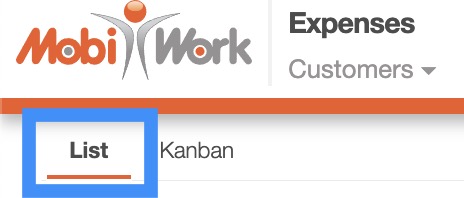
The corresponding rows under the column headings will display the relevant user data.
The checkboxes (multiple selection area) found to the left of the "ID" column, will allow you to select either one or multiple expenses to view, edit, or delete:

By clicking the topmost checkbox in the column heading you will select all the expenses.
The "List" tab column headings are defined as:
| Name: | Description: |
|---|---|
| "ID" | The ID of the expense. |
| "Date" | The expense date of the expense. |
| "User" | The user the expense is intended for. |
| "Status" | The status of the expense. The status can be "Show All," "Approved," "Today," "Last Week," "Open," "Reimbursed," "Yesterday," "This Month," "Waiting For Approval," "Rejected," "This Week," or "This Year." |
| "Entity" | Lists any associated entities connected to the expense (e.g., customers, work orders, quotes, and more). |
| "Description" | The expense description. |
| "Payment Type" | The method the user initially used to cover the payment. |
| "Amount" | The amount owed for the expense. |
| "Actions" | Allows you to view, edit, or delete the selected expense. |
List Tab Individual Actions
When selecting an expense and clicking on the Individual Actions button (the three vertical dots under the "Actions" column) you will be able to view, edit, or delete the expense.
Any actions that are done with the Individual Actions button will only apply to the selected expense:
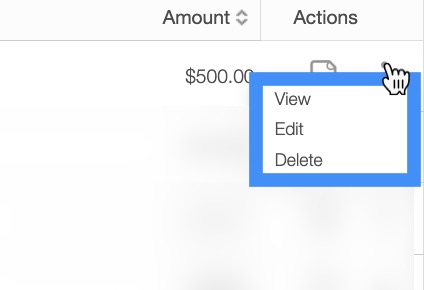
The options that are displayed when you select the Individual Actions button are also available under the right-click actions.

List Tab Right-Click Actions
When right-clicking with your mouse on an expense in the "List" tab, you will be able to view, edit, or delete the selected expense.
The options that are displayed when you right-click on an expense are also available when you select the Individual Actions button.
Any actions that are done with the right-click actions will only apply to the selected expense:
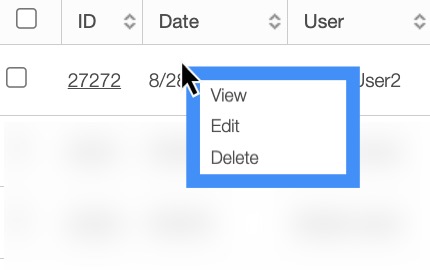
The definitions for the actions found in the Individual Actions and when you right-click in the "List" tab are below:
| Name: | Description: |
|---|---|
| "View" | Opens the View Reminder pop-up window. |
| "Edit" | Edits the selected expense. |
| "Delete" | Deletes the selected expense. |
With the "Kanban" tab, you can easily view your expenses and their statuses on a visual and interactive board:
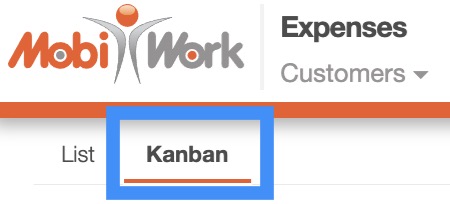
Kanban Tab Layout
The columns in the "Kanban" tab will be organized by the expense status. For more information about the expense status, please see the New Search section:
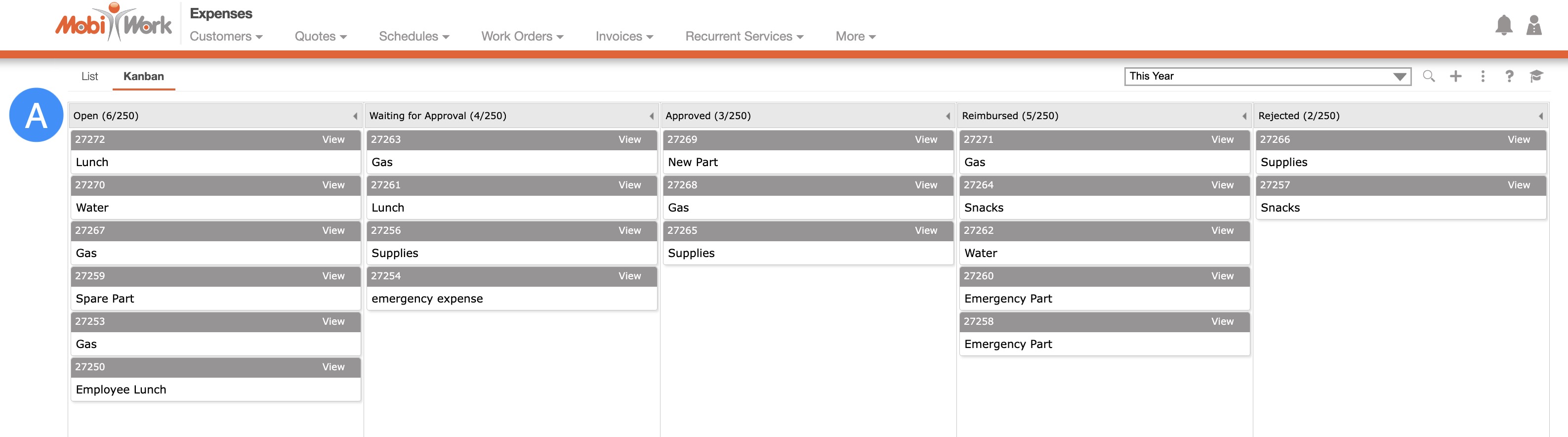
Kanban Tab Columns
Kanban Tab Columns
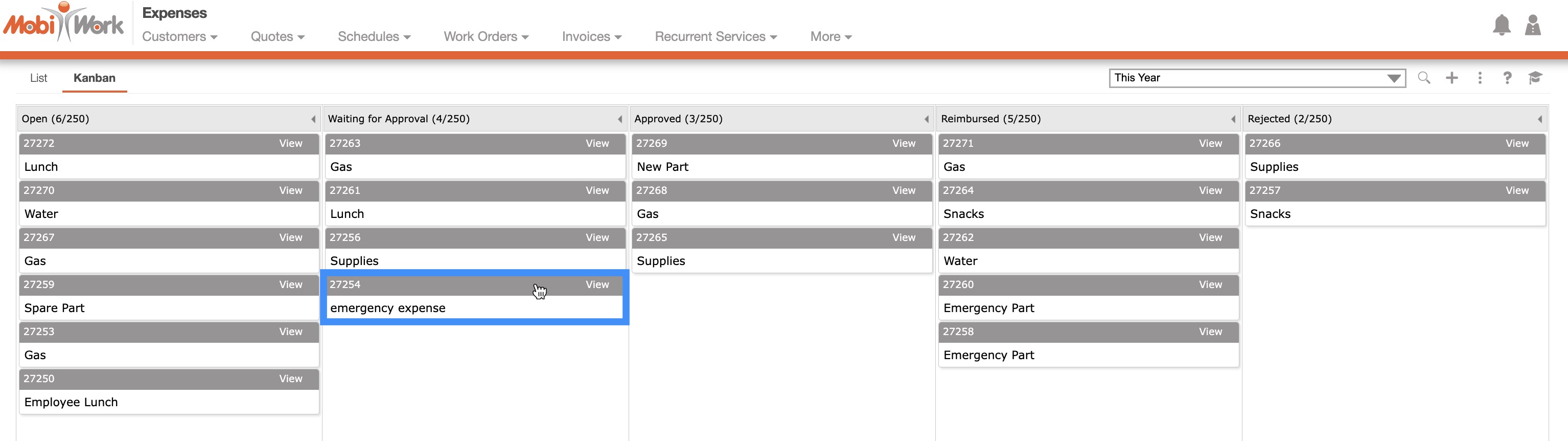
The expense's ID number and description will be displayed. To open the View Expense pop-up window, simply click on the desired expense:
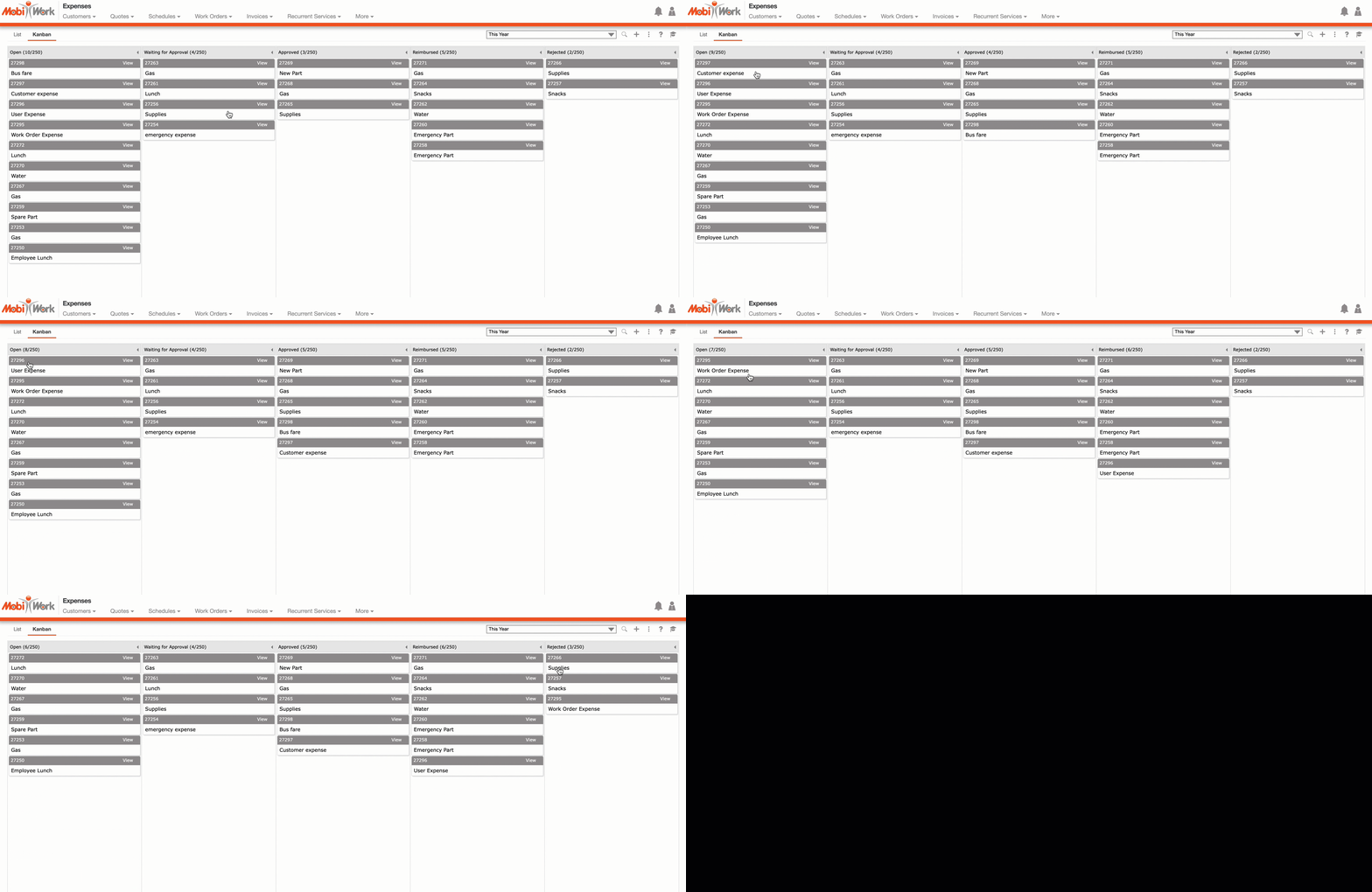
You can update the status of a selected expense by dragging & dropping the expense to the desired status column:
There are five different columns:
"Open"- The expense is open.
"Waiting for Approval"- The expense is waiting for manager approval.
"Approved"- The expense has been approved by the manager.
"Reimbursed"- The payment for the expense has been reimbursed to the user.
"Rejected"- The expense has been rejected by the manager.
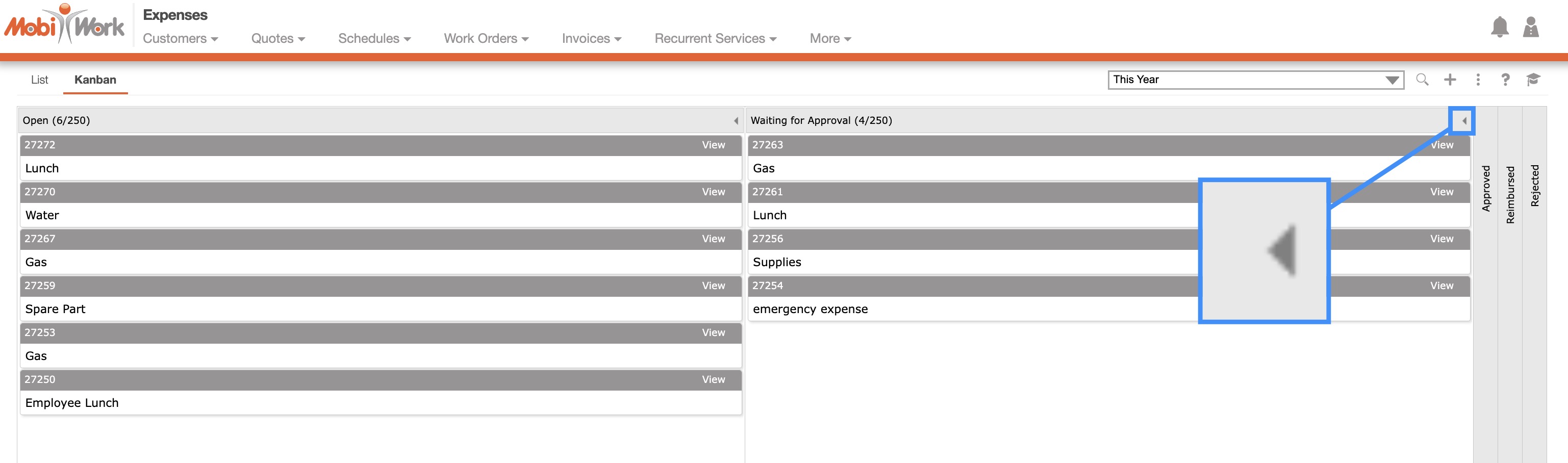
If you would like to collapse a column so that only your chosen columns are visible, you can click on the arrow to the right of the column header: